The real question in home defense isn’t “pistol or AR-15,” but how clearly and deliberately you can respond when everything is dark, loud, and unfamiliar at 3 a.m.
Story Snapshot
- Why a nightstand pistol and a ready AR-15 solve different problems inside the same hallway
- How overpenetration myths flip once you look at modern 5.56 vs common 9mm loads
- Why training time, not caliber, quietly decides who walks away
- How layout, budget, and politics tug your choice in opposite directions
How Pistol And AR-15 Serve Different Home Defense Missions
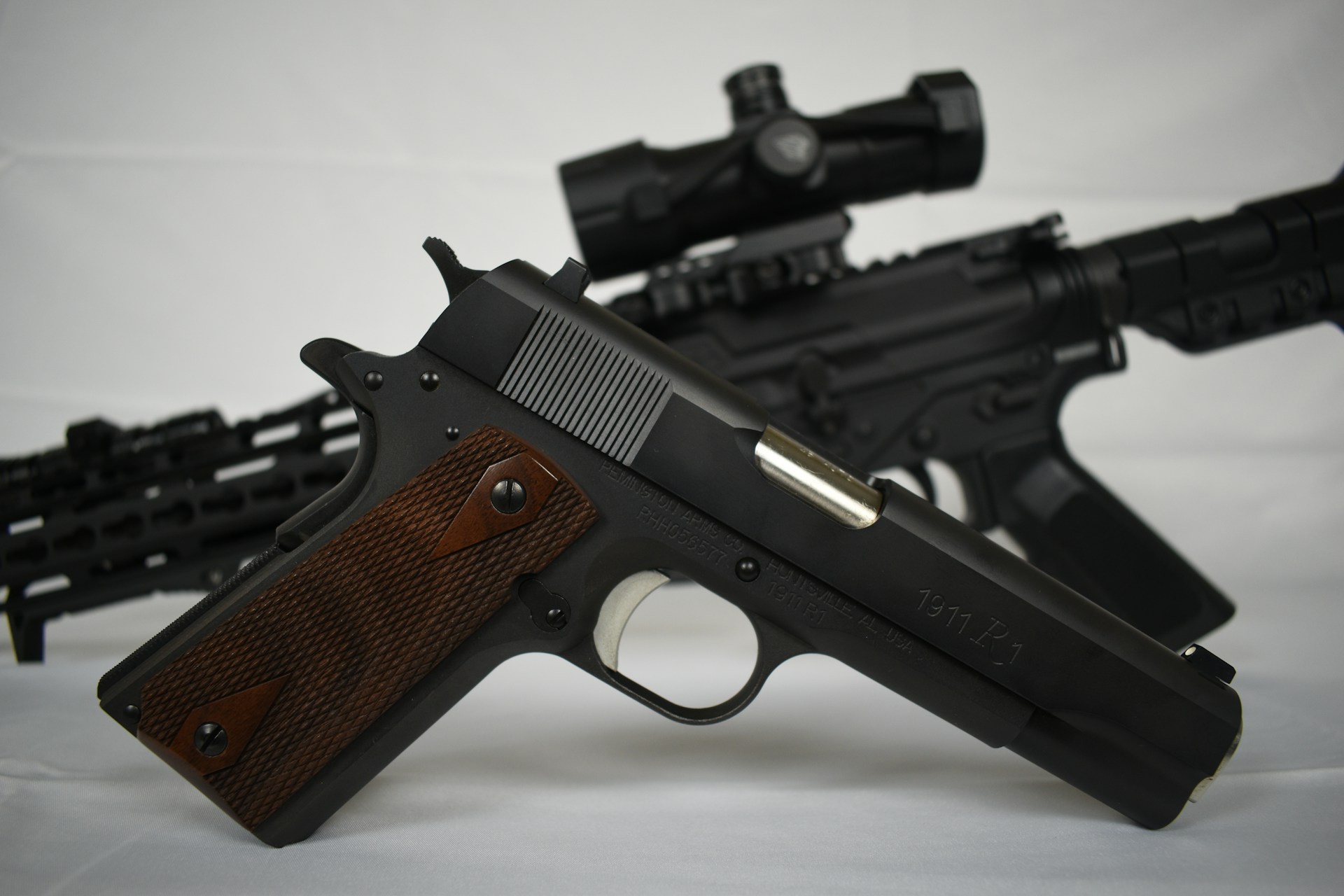
Most homeowners do not face a war zone; they face a groggy, confused 10-second window between “What was that noise?” and a potential lethal encounter in a dark hallway. A full-size 9mm pistol shines here because it lives in a nightstand, weighs around 1.8 pounds, and can be brought into action quickly with one hand while the other dials 911 or corrals kids. An AR-15 shines when the threat is more than a lone, unarmored burglar.
Rifles based on the AR platform bring 30-round capacity, superior accuracy, and meaningful performance against body armor, multiple intruders, or rural threats like aggressive animals. That matters to homeowners who look beyond the “bump in the night” scenario and plan for the rare but catastrophic event. The split is clear: pistols answer “right now, in tight spaces,” while AR-15s answer “what if this turns into a real fight?” The smartest households acknowledge both missions and equip accordingly.
Handling, Overpenetration, And What Walls Really Do
Typical American homes offer narrow hallways under ten feet and interior walls made of drywall, light framing, and air. Inside these spaces, compact guns rule. A pistol stays tight to the body and turns corners without broadcasting a foot of barrel ahead of you like an invitation to be grabbed. AR-15s can feel clumsy indoors unless configured as short-barreled rifles or AR pistols, which trim overall length and weight to near-pistol maneuverability.
Overpenetration fears often push people toward handguns, but ballistic testing and expert analysis complicate that assumption. Common 9mm full metal jacket rounds stay intact and tend to punch through multiple layers of drywall with enough energy to threaten people in adjacent rooms or neighboring units. Many 5.56 AR-15 loads yaw and fragment in soft tissue and lose energy more quickly after encountering walls, especially when using defensive ammunition designed to break up.
Training, Cost, And Who Really Uses The Gun Well
Hardware debates ignore the quiet truth that the better-trained shooter usually wins regardless of platform. Pistols offer a lower barrier to entry with purchase prices often between $400 and $800 and cheaper 9mm ammunition running roughly $0.20–$0.40 per round, which encourages more frequent practice.That matters for adults on a budget who still want to maintain meaningful proficiency for draw, presentation, and rapid accurate fire under stress.
AR-15s demand more up front: rifles commonly run $700–$1500 before optics, lights, and slings, and .223/5.56 ammunition often costs $0.50 or more per round. Training organizations point out that new shooters often find ARs easier to shoot accurately than pistols due to the third point of contact at the shoulder and longer sight radius or red-dot optics. Conservative common sense says the “best” gun is the one you can afford to train with until operation feels boringly automatic, not just the one that looks impressive in a safe.
Hybrid Platforms, Legal Gray Areas, And Conservative Risk Calculus
AR pistols and pistol-caliber carbines emerged as an answer to the home-defense dilemma, offering rifle-like stability with shorter barrels and often using 9mm for cheaper training and softer recoil. Recent ATF actions around stabilizing braces and AR pistol classifications have complicated ownership and configuration choices, forcing responsible citizens to track shifting rules just to avoid accidental felonies. That reality weighs heavily for cautious homeowners who value both the Second Amendment and staying squarely inside the law.
Forum discussions from 2023 through 2025 show strong support for AR-style 9mm carbines and AR pistols for home defense, citing better control, higher capacity, and less muzzle blast than full-power 5.56 indoors. Liberty Safe’s analysis leans toward the AR-15 as the superior home-defense tool when properly configured and loaded, while other experts recommend pistols for most people and ARs for those willing to invest in training and compliance. From an American conservative standpoint, the ideal setup respects law, budget, and neighbor safety while preserving decisive defensive capability inside your own four walls.
Sources:
Valortec – Pistols vs AR-15 for Home Defense
Guns.com – AR Pistols vs AR-15 Rifles for Home Defense
Liberty Safe – Best Home Defense Firearm
Northwest Firearms – 9mm Pistol vs AR-Style 9mm for Home Defense
YouTube – AR-15 vs Handgun: Home Defense Showdown