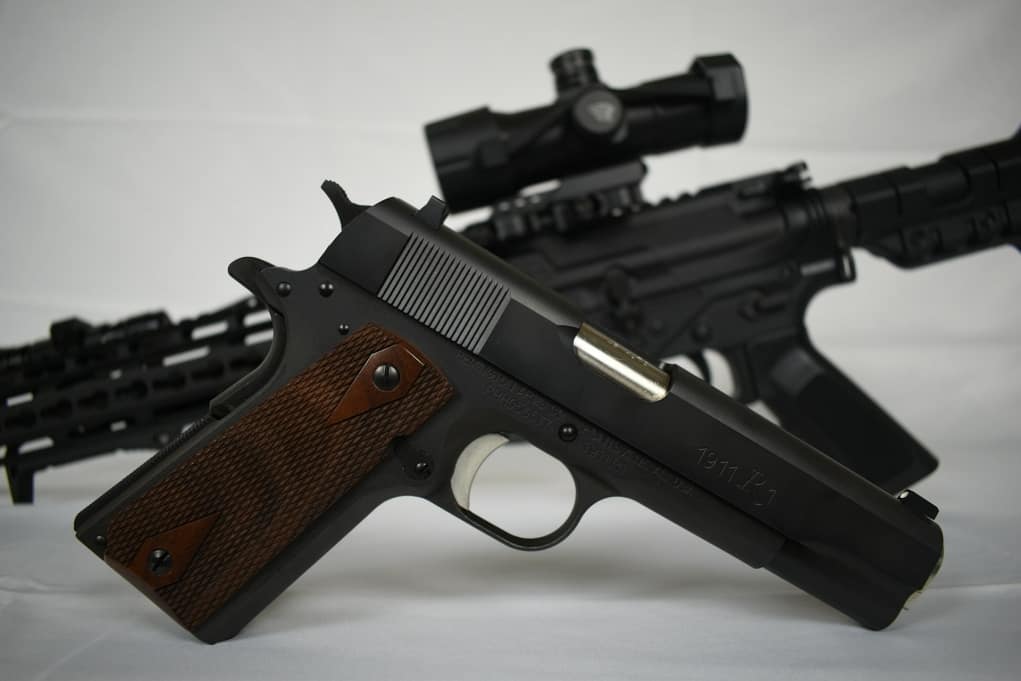
Home defense discussions often turn into debates about which firearm platform is “best.” Some people strongly prefer pistols because of their compact size and maneuverability, while others argue that rifles offer superior control and effectiveness. In reality, both platforms solve different problems, and understanding those differences is far more useful than treating the conversation like a competition.
Choosing a home defense firearm is not simply about power or popularity. It involves balancing factors such as maneuverability, recoil control, storage, training, household layout, and personal experience level.
The most effective defensive setup is usually the one that fits the user’s environment and skill level while allowing safe, confident operation under stress. Understanding the strengths and limitations of both pistols and rifles can help people make more informed and realistic decisions.
Pistols Prioritize Portability and Accessibility
One of the biggest advantages of pistols is their compact size.
Handguns are easier to store securely in smaller safes, simpler to carry throughout daily life, and generally more maneuverable in tight indoor spaces. For many households, accessibility becomes a major reason pistols remain popular for home defense.
Pistols may offer advantages such as:
- Compact storage
- Easier one-handed operation
- Greater mobility indoors
- Simpler transportation
- Faster accessibility from quick-access safes
This flexibility can matter in homes with narrow hallways, smaller rooms, or situations where a person may need to move family members or use a phone simultaneously.
However, pistols also require more skill to shoot accurately under stress compared to shoulder-fired firearms.
Rifles Often Improve Stability and Control
While rifles are larger, many shooters find them easier to control effectively.
A rifle provides multiple points of contact with the body through the shoulder stock, support hand, and cheek weld. This additional stability can improve:
- Accuracy
- Sight tracking
- Recoil management
- Follow-up shot consistency
- Low-light aiming capability
For many users, especially newer shooters, rifles may actually feel easier to shoot accurately than handguns despite their larger size.
Modern sporting rifles and pistol-caliber carbines are also commonly equipped with mounted lights and optics that improve target identification and visibility in low-light conditions.
Maneuverability Depends on Environment
One common assumption is that rifles are always too large for indoor defense. In reality, maneuverability depends heavily on home layout and firearm configuration.
Factors such as:
- Hallway width
- Doorway spacing
- Furniture placement
- Staircases
- Room size
all influence how manageable different firearms feel indoors.
Shorter rifles or carbines may remain highly maneuverable, while full-size firearms with long barrels may become less practical in confined spaces.
At the same time, pistols require more precise sight alignment and recoil control, especially during stressful situations.
This highlights an important point: every platform involves tradeoffs.
Training Matters More Than Platform Debates
Many experienced instructors emphasize that training and familiarity often matter more than the firearm category itself.
A reliable pistol in trained hands may outperform a rifle that the owner rarely practices with. Likewise, a rifle may offer advantages for someone who shoots it confidently and consistently.
Important areas of training include:
- Safe firearm handling
- Target identification
- Reloading procedures
- Low-light awareness
- Movement inside structures
- Communication during emergencies
The ability to remain calm and make clear decisions under pressure usually matters more than internet arguments about platform superiority.
Storage and Household Considerations Matter Too
Home defense planning also involves thinking about who lives in the home and how firearms are secured.
Important considerations may include:
- Children in the household
- Quick-access storage needs
- Safe room planning
- Accessibility during emergencies
- Noise and overpenetration concerns
- Household member training levels
A firearm should fit not only the user, but also the realities of the environment where it may actually be used.
Responsible planning extends beyond simply purchasing equipment.
What Readers Should Understand About Pistols and Rifles for Home Defense
Pistols and rifles each offer distinct strengths depending on the situation.
Key takeaways include:
- Pistols prioritize portability and accessibility
- Rifles often improve stability and recoil control
- Home layout influences maneuverability significantly
- Training matters more than platform loyalty
- Safe storage is part of responsible ownership
- Practical fit matters more than internet debates
The “best” home defense firearm is usually the one that can be handled safely, confidently, and consistently within the user’s actual environment.
Effective Preparedness Is About Matching Tools to Reality
Home defense decisions are often more nuanced than simple platform comparisons suggest. Pistols and rifles were designed for different purposes, and both can serve valuable roles depending on the household, training level, and circumstances involved.
Rather than focusing on finding a universally perfect solution, responsible firearm owners are usually better served by understanding the strengths and limitations of each platform realistically. Confidence, safe handling, situational awareness, and preparation often matter far more than brand loyalty or caliber arguments.
In the end, effective home defense is less about owning a specific type of firearm and more about building systems, habits, and skills that support calm and responsible decision-making under pressure.
Sources
- National Shooting Sports Foundation (NSSF)
- Federal Law Enforcement Training Centers (FLETC)
- Project ChildSafe Firearm Safety Resources
- Sporting Arms and Ammunition Manufacturers’ Institute (SAAMI)
- U.S. Concealed Carry Association Educational Resources