Starting a fire is often presented as a simple outdoor skill, but wet conditions quickly reveal how challenging it can be. Rain, snowmelt, damp ground, and high humidity all work against ignition, even when you have experience and the right tools. In these situations, success depends less on flashy techniques and more on understanding how moisture affects fire and how to adapt accordingly.
This article explains what actually works when everything is damp. Rather than relying on tricks or exaggerated demonstrations, it focuses on practical principles that apply in real-world conditions and can be repeated reliably.
Why Moisture Changes the Fire-Starting Process
Fire requires heat, oxygen, and fuel. Wet conditions primarily interfere with fuel by absorbing heat before ignition can occur. Moisture forces you to spend more energy just to dry materials enough for them to burn.
Wet ground compounds the problem by pulling heat away from embers, while humid air slows evaporation. Recognizing these constraints allows you to make smarter decisions about fuel selection, fire placement, and structure instead of repeatedly attempting methods that are unlikely to work.
Where to Find Usable Wood After Rain
Even in steady rain, not all wood is equally wet. Standing deadwood is often the best option because it dries more effectively than wood lying on the ground. While the exterior may feel damp, the interior is frequently usable once split open.
Larger branches and logs tend to retain drier cores than small twigs. Splitting wood lengthwise exposes these protected inner fibers, which ignite more easily and burn more consistently than surface material that has absorbed moisture.
Why Tinder Is the Most Important Component
In wet conditions, tinder selection often matters more than the ignition source itself. Natural tinder such as birch bark, fatwood, and resin-rich pine can still burn when damp, but they require preparation into fine shavings to increase surface area and ignition speed.
Man-made tinder provides an added margin of reliability. Wax-based starters, treated cotton, or commercial fire tabs burn longer and hotter, helping dry small kindling long enough for the fire to sustain itself.
A visual comparison of different tinder types can help illustrate how burn time and flame intensity affect success when moisture is present.
Building a Fire That Can Overcome Damp Ground
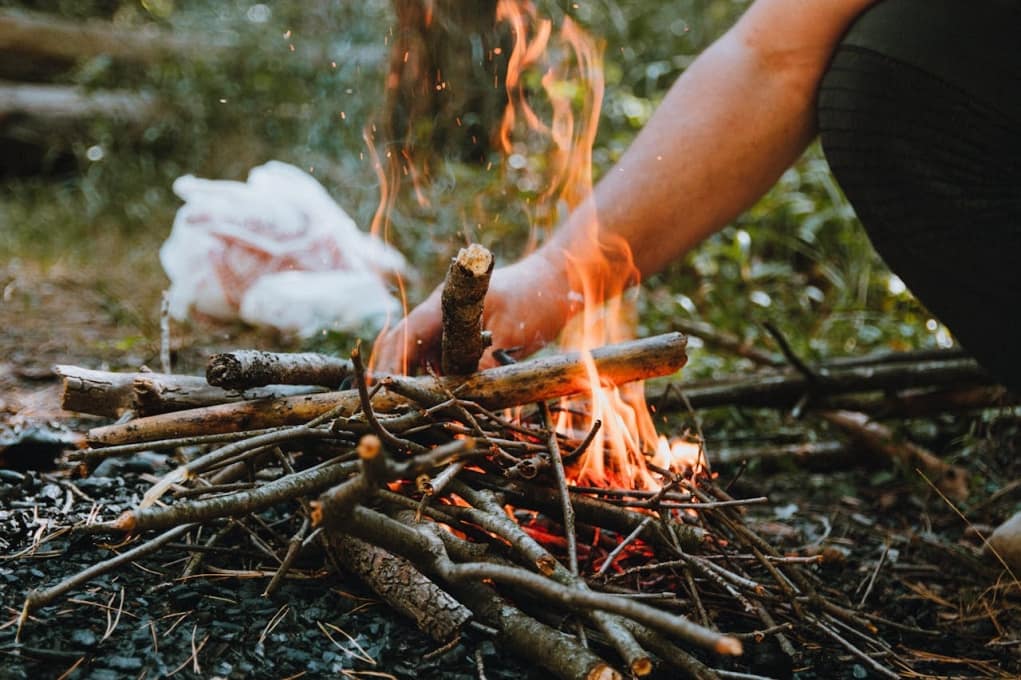
Fire structure plays a major role in wet environments. Elevating the fire slightly off the ground using flat wood, bark, or stones reduces heat loss and keeps embers from being smothered by moisture.
Vertical arrangements such as teepee or lean-to styles allow heat to rise and pre-dry fuel before it ignites. This gradual warming is especially helpful when kindling contains residual moisture and needs time to catch.
Choosing Ignition Tools That Perform Consistently
No single ignition tool works perfectly in every wet scenario. Ferro rods can be effective but require well-prepared tinder and good technique. Waterproof matches and wind-resistant lighters offer more consistent flame but still depend on proper fuel preparation.
The most reliable approach is redundancy. Carrying multiple ignition options and pairing them with dependable tinder increases your chances of success without relying on any single method.
Seeing how different ignition tools perform side by side in damp conditions can clarify which options are most dependable in practice.
What Matters Most When Everything Is Wet
Standing deadwood often contains usable fuel even after rain
Splitting wood exposes drier inner material
Tinder quality outweighs ignition method
Elevating the fire reduces heat loss to wet ground
Longer burn time improves reliability in damp conditions
Building Confidence Through Practical Firecraft
Starting a fire in wet conditions is less about mastering a trick and more about applying fundamentals consistently. Moisture cannot be ignored or overcome instantly, but it can be managed through preparation, material selection, and thoughtful fire construction.
With practice, these principles become intuitive, allowing you to adapt calmly when conditions are less than ideal. Reliable firecraft is built through understanding, not shortcuts.
Sources
U.S. Forest Service – Fire Behavior and Fuel Moisture
National Park Service – Wilderness Fire Safety Guidelines
The Mountaineers – Firecraft and Backcountry Skills
Boy Scouts of America Fieldbook – Fire Building Principles