
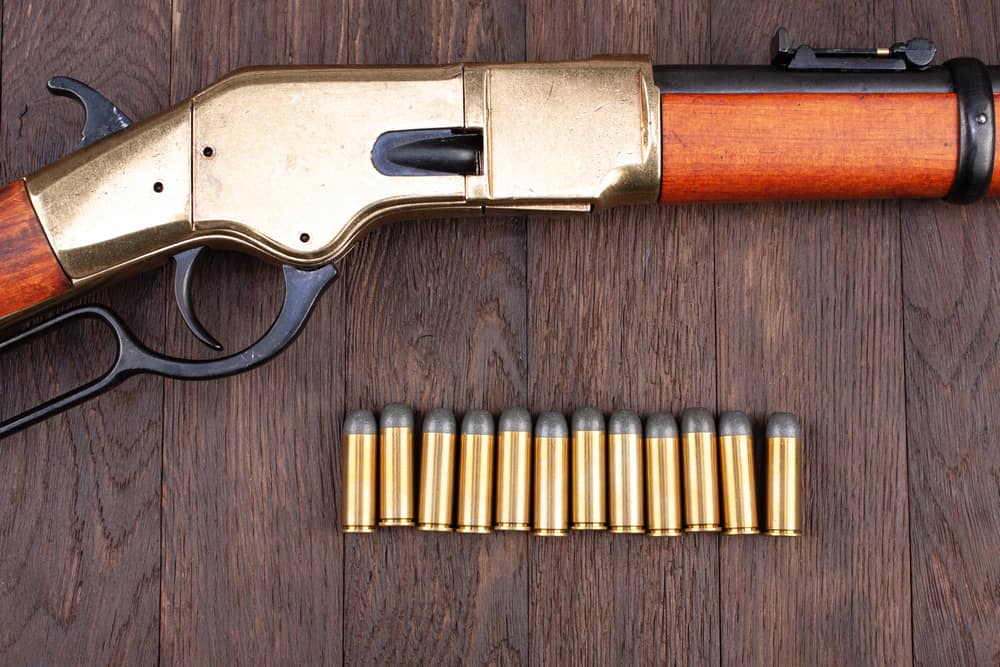
Few firearms are as instantly recognizable as the lever-action rifle. Its distinctive cycling motion and long association with frontier life have made it a lasting symbol of American firearms history. Beyond its cultural image, the lever-action rifle represents an important technological step in the evolution of repeating firearms—bridging the gap between single-shot rifles and modern repeating systems.
Understanding the history of the lever-action rifle offers insight into how firearm design evolved alongside changing needs in hunting, defense, and warfare. This article explores where lever-action rifles began, how they developed, and why they continue to hold relevance today.
Early Firearms and the Need for Repeating Systems
Before the mid-19th century, most rifles were single-shot or slow to reload. Black powder muzzleloaders required careful loading after each shot, limiting their effectiveness in fast-moving situations. As populations expanded westward and conflicts became more dynamic, shooters needed firearms that could fire multiple rounds without lengthy reloading.
Inventors began experimenting with repeating mechanisms that could chamber fresh cartridges quickly. Lever-operated designs emerged as one of the most practical solutions, offering speed, reliability, and mechanical simplicity.
The First Successful Lever-Action Designs
One of the earliest practical lever-action rifles was the Henry rifle, introduced in 1860 by Benjamin Tyler Henry. The Henry rifle used a lever to chamber cartridges from a tubular magazine located beneath the barrel, allowing users to fire multiple rounds rapidly.
Although not officially adopted as standard military equipment, the Henry rifle gained popularity among soldiers and civilians who appreciated its firepower and ease of use. Its success demonstrated that lever-action systems could work reliably in real-world conditions.
The Rise of Winchester and Widespread Adoption
The lever-action rifle reached its peak popularity through the efforts of Winchester Repeating Arms. Building on Henry’s original design, Winchester introduced models that improved durability, loading methods, and cartridge compatibility.
Rifles such as the Winchester Model 1873 became closely associated with westward expansion, ranch life, and frontier defense. Their ability to share ammunition with revolvers made them especially practical for settlers and lawmen. Lever-action rifles were no longer experimental tools—they became everyday working firearms.
Military Use and Design Limitations
Despite their success among civilians, lever-action rifles saw limited long-term military adoption. Tubular magazines restricted bullet shape, and lever mechanisms were less compatible with prone firing positions compared to bolt-action rifles.
As smokeless powder and higher-pressure cartridges became standard, militaries shifted toward bolt-action designs that better supported longer ranges and stronger cartridges. Still, lever-action rifles remained popular in civilian markets, especially for hunting and sport shooting.
Why Lever-Action Rifles Endured
Even as bolt-action and semi-automatic rifles advanced, lever-action rifles retained a loyal following. Their balance, smooth cycling, and intuitive operation made them especially effective for hunting in dense terrain.
Many modern lever-action rifles now use updated materials, improved manufacturing techniques, and modern calibers. While their core design remains unchanged, their performance continues to evolve with contemporary needs.
What the Lever-Action Rifle Represents
The lever-action rifle is more than a mechanical design—it represents a transitional era in firearm history. It reflects a time when innovation responded directly to practical needs, balancing speed, reliability, and simplicity.
Key takeaways from the lever-action rifle’s history include:
It introduced reliable repeating fire to everyday users
It shaped civilian firearm culture more than military doctrine
Its design influenced later repeating firearm mechanisms
Its practicality ensured long-term survival beyond its era
A Lasting Place in Firearms History
The lever-action rifle remains a respected and functional firearm more than a century after its introduction. While no longer at the forefront of military development, it continues to serve hunters, collectors, and shooting enthusiasts around the world.
Its longevity speaks to the strength of its design and the role it played during a pivotal period in firearms evolution. The lever-action rifle stands as a reminder that innovation does not need to be complex to be effective—it needs to be reliable, practical, and well understood.
Sources
Smithsonian National Museum of American History – Firearms Collections
National Firearms Museum – Lever-Action Rifle History
Library of Congress – 19th Century Firearms Development
Winchester Firearms Historical Archives