
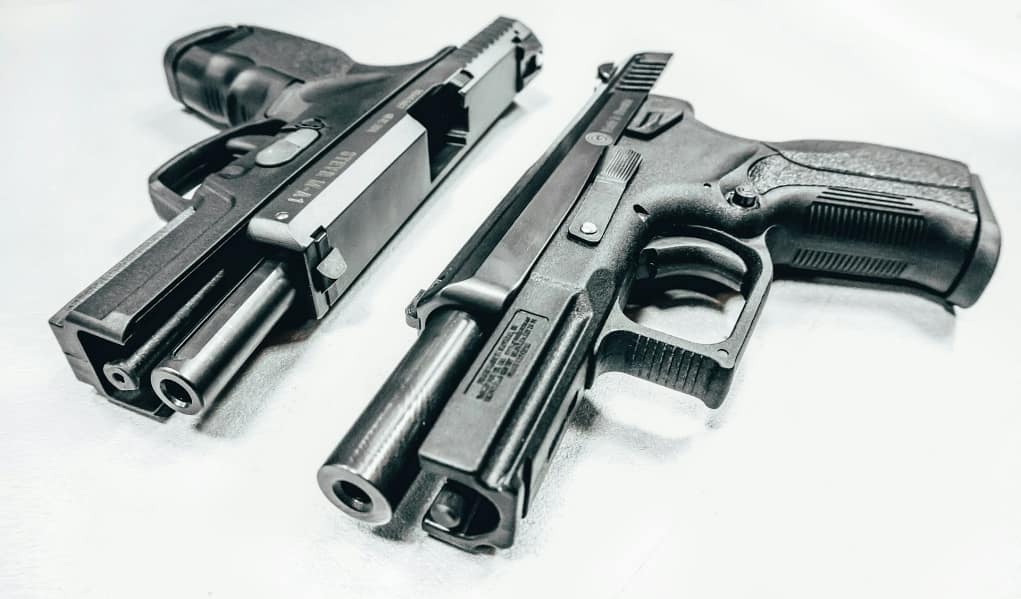
Most firearm owners understand that regular cleaning helps preserve reliability and reduce wear. However, fewer people realize that the way a firearm is cleaned—especially the direction in which the bore is cleaned—can also influence long-term accuracy and barrel condition.
For many rifles and precision-focused firearms, improper cleaning habits may gradually damage sensitive areas inside the barrel, particularly near the muzzle crown and chamber. While the effects may not appear immediately, repeated poor cleaning techniques over time can contribute to unnecessary wear that affects consistency and precision.
Understanding why cleaning direction matters helps firearm owners maintain their equipment more effectively while avoiding mistakes that may unintentionally reduce performance.
The Barrel Is One of the Most Sensitive Components
A firearm barrel is designed with extremely precise internal dimensions.
The rifling grooves inside the bore stabilize the projectile as it travels down the barrel, and the muzzle crown—the area surrounding the bullet’s exit point—plays a particularly important role in maintaining consistent gas release as the projectile exits.
Even small imperfections near the crown may affect accuracy because uneven gas pressure around the projectile can slightly alter bullet flight.
This is why many experienced shooters and gunsmiths handle cleaning rods carefully and pay close attention to how cleaning tools move through the barrel.
Cleaning From Chamber to Muzzle Helps Protect the Crown
One of the most widely recommended cleaning methods involves pushing cleaning tools from the chamber end toward the muzzle whenever the firearm design allows it.
This direction matters because it helps reduce unnecessary contact with the muzzle crown.
Cleaning rods inserted improperly from the muzzle side may:
- Rub against the crown
- Cause uneven wear over time
- Introduce small scratches
- Damage rifling edges near the muzzle
While occasional contact may not immediately ruin accuracy, repeated improper cleaning over years of use can gradually create issues that affect precision.
Cleaning from chamber to muzzle also follows the natural direction debris travels during firing, helping remove fouling more efficiently.
Bore Guides Help Reduce Unnecessary Wear
Many precision shooters use bore guides during cleaning because they help keep cleaning rods centered inside the barrel.
A bore guide may help prevent:
- Rod flexing
- Chamber wear
- Solvent leakage into the action
- Accidental contact with rifling surfaces
This becomes especially important for rifles used in precision shooting where consistency matters heavily.
Using coated cleaning rods and proper-sized bore brushes may also help reduce unnecessary abrasion during maintenance.
The goal is controlled cleaning rather than aggressive scrubbing.
Overcleaning Can Also Become a Problem
Many newer firearm owners assume frequent aggressive cleaning improves performance, but excessive cleaning may sometimes cause more wear than moderate fouling itself.
Aggressive techniques such as:
- Excessive brushing
- Harsh scraping
- Improper rod use
- Excessive solvent exposure
can gradually wear protective finishes or damage sensitive barrel surfaces.
In many cases, consistency and proper technique matter more than extreme cleaning frequency.
Experienced shooters often focus on maintaining the firearm carefully rather than trying to make the barrel appear perfectly spotless after every range session.
Different Firearms Require Different Approaches
Not every firearm can easily be cleaned from the chamber end due to design limitations.
For example:
- Bolt-action rifles often allow straightforward chamber-to-muzzle cleaning
- Some semi-automatic rifles may require partial disassembly
- Certain shotguns and pistols have different maintenance procedures entirely
This is why manufacturer recommendations matter.
Using the correct tools and following firearm-specific maintenance instructions helps reduce unnecessary wear while improving long-term reliability and performance.
What Readers Should Understand About Cleaning Direction
Proper cleaning technique protects both barrel condition and long-term accuracy.
Important takeaways include:
- The muzzle crown plays a major role in accuracy
- Chamber-to-muzzle cleaning helps reduce crown wear
- Bore guides improve rod alignment and control
- Aggressive cleaning can create unnecessary wear
- Proper tools matter significantly
- Consistent careful maintenance is more valuable than excessive cleaning
Firearm maintenance is not only about removing fouling. It is also about preserving the precision surfaces that allow the firearm to perform consistently over time.
Long-Term Accuracy Depends on Small Habits
Many firearm maintenance mistakes do not create immediate problems, which is why poor cleaning habits sometimes go unnoticed for years. Yet long-term accuracy often depends on small details repeated consistently over time.
Cleaning direction, rod alignment, tool selection, and overall technique all influence how well sensitive barrel surfaces are preserved. Responsible maintenance is less about perfection and more about understanding how to clean thoroughly without creating unnecessary wear in the process.
For many experienced firearm owners, proper cleaning eventually becomes part of a broader mindset centered around consistency, patience, and protecting the firearm’s long-term reliability and precision.
Sources
- National Shooting Sports Foundation (NSSF) Firearm Maintenance Resources
- Sporting Arms and Ammunition Manufacturers’ Institute (SAAMI)
- Project ChildSafe Firearm Safety Information
- Federal Bureau of Investigation (FBI) Firearm Safety Guidance
- Occupational Safety and Health Administration (OSHA) Chemical Handling Guidance